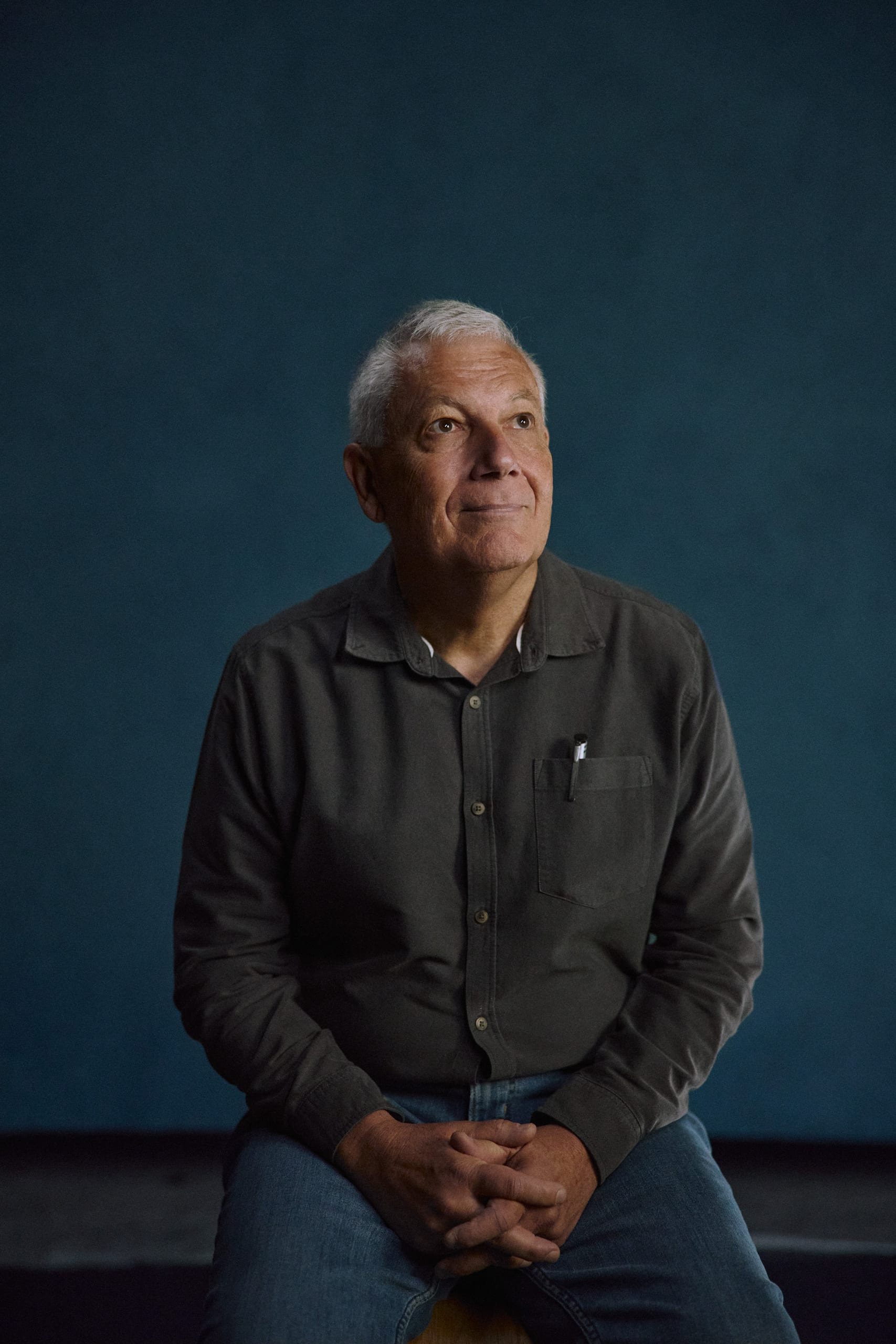
Men in Mind HCP — Part 2
1 / 36
Men in Mind HCP — Part 2 hero image
HCP

Men in Mind HCP

Part 1 explored what men bring into the room. Part 2 is about what you do with it.

Please note

This course was written for general practitioners, so the examples assume a GP consultation. We are exploring a version for health and community roles. Full details in the FAQ.

SCREEN 3 · faq
Before you begin

Frequently asked questions

Select any question to expand the answer.

Who this version was designed for

Men in Mind was written for general practitioners. This edition is that same course with the accreditation and CPD certificate removed, so it is open to anyone working in men’s health.

What that means in practice: the videos, case examples and practical tools assume a GP consultation — a booked appointment, a clinical history, and the option to order tests or refer. The core of the course is about how masculinity shapes the way men seek help, communicate and engage, and that applies wherever you work. Some of the mechanics will not.

The course also refers to the men you work with as “patients” throughout, which will not match every setting.

We are exploring developing a version designed around health and community roles from the ground up. If something here does not fit your work, please tell us in the post course survey or contact learning@movember.com.

The man in front of you is an opportunity. Not to do more in ten minutes, but to shift how he engages with healthcare for years to come.

You'll get a record of completion at the end of the final module, which you can print, download or email to yourself. It confirms you finished the course.

It is not an accredited CPD certificate. This edition of the course is not accredited by any professional body, and your completion is not sent to a governing body or CPD register. If you need accredited CPD hours, there are separately accredited versions of Men in Mind for general practitioners, nurses and pharmacists.

Absolutely! We know you may need to have breaks or get interrupted. That said, leaving the module 'idle' for too long may result in problems with the course registering as completed and you will need to start again. All you need to do is exit the course by selecting the X in the top right-hand corner. This will save your place and pick up where you left off next time.

The full course is made up of 3 sections, which take approximately 2.5 hours in total to complete.

If you run into any problems, don't fret! Feel free to email learning@movember.com with a screenshot or description of the problem you're having and we'll do everything we can to help, as quickly as we can.

Just a pair of headphones if you want to listen to any of the video content with sound. All videos are captioned so you can listen without sound. The course can be completed on your laptop, desktop computer or even your phone.

Whenever you see a "MOUSTACHES LOVE RESEARCH" panel or a highlighted link, it contains a citation or external resource you can open to read more. This is entirely optional, and there's a full list of references and additional resources on the final screen for you to email or keep.

Absolutely not! Throughout the course you'll be given a heap of optional content including educational videos, external links, case studies and journal articles. None of these are mandatory.

We also reference our supporting evidence constantly, which you can review if you're interested. Consume the optional learning at your own pace, or not at all. Don't worry about saving content as you go — there's a library of all the resources at the end of the module.

This module is designed to work with standard screen readers, including JAWS, NVDA and VoiceOver. Interactive elements are keyboard navigable, videos have transcripts, and you can adjust the text size, switch to night mode, or turn on reduced motion using the settings (gear) button.

If you experience any accessibility issues, please contact learning@movember.com.

Part 2: Meet him where he's at

Part 2: Meet him where he's at

Part 1 explored what men bring into the room. Part 2 is about what you do with it.


Part 2: Meet him where he's at

The man in front of you is an opportunity. Not to do more in ten minutes, but to shift how he engages with healthcare for years to come.

That longer horizon is where men's health outcomes are made, particularly for mental health. Earlier intervention, the follow-up, the referral, the next conversation: these rely on him coming back. And for many men, whether they come back rests on whether they felt seen the first time. 43% of Australian men have left a healthcare practitioner due to a lack of personal connection (Movember, 2024).

2.1: Acknowledge the whole man

2.1 Acknowledge the whole man

Person-centred care is foundational to good clinical practice, but without a gendered lens, it risks being too generic to reach the men who need it most.


Treating everyone as an individual is necessary but not sufficient — a gendered lens is a clinical tool and going without it could cost the man in front of you.

Gender is a social determinant of health. It shapes how men interpret symptoms, what they disclose, how they respond to treatment, and whether they come back. This isn't about doubting what men tell you. It's about understanding the conditions under which they tend to disclose — which are, for many, conditions of understatement. Symptom minimisation is one of the most consistent barriers men bring into clinical encounters.

Person-centred care is rarely taught through a gendered lens. Without it, care for men risks being dismissive of the specific barriers they bring. Treating the whole man means treating the gendered man. Anything less is person-centred in name only.

Don't take stoicism at face value

Stoicism and minimisation of symptoms are not the same as absence of distress. They're a presentation style shaped by decades of socialisation that equates emotional expression or vulnerability with loss of masculine standing.

Research consistently shows that practitioner responses to male patients are frequently shaped by gendered assumptions — that men can push through, that they're more tolerant, that they need less emotional acknowledgement. The result is that we risk missing opportunities to recognise men's illness or distress and target treatment accordingly.

The clinical skill here is not to project distress onto men who aren't experiencing it. It's to remain curious when a man's presentation seems to close things down too quickly — to notice when a brief "I'm fine" sits alongside other signals, and to create conditions in which more can be said without demanding it.

Tips

  • Use his own words. Echoing his language ("managing", "feeling flat", "getting by", "fine") signals you've listened, and reduces the confrontational register of the follow-up. "You said 'getting by' — tell me more" is much less challenging than "are you sure you're ok?"
  • Quantify before you qualify. A scaling question gives him a concrete, bounded task that doesn't require emotional fluency to answer. It's often the easiest way to surface severity from a man who has already minimised.

Examples

Tap each card to reveal an example phrase.

1 Tap to reveal

"You said you're managing — what does managing look like for you at the moment?"

2 Tap to reveal

"You said you're 'feeling flat'. What does 'feeling flat' look like on its worst days?"

3 Tap to reveal

"I hear you that it's not a big deal. Just so I've got the full picture — what would have to change for it to become a big deal?"

4 Tap to reveal

"On a scale of one to ten, how bad has it been at its worst?"

Macdonald and colleagues (2022) prepared a literature review for the Australian Government Department of Health and Aged Care on men's and boys' barriers to health system access. Problem minimisation, the need for self-reliance, and stoicism or emotional control emerged as the most consistent individual-level barriers men bring into clinical encounters, with symptom minimisation in particular shaping not just what men disclose but whether what they disclose is acted on.

Markowitz (2022) used natural language processing to analyse 1.8 million caregiver notes (502 million words) from a large US hospital. Consistent with non-linguistic evidence of bias in medicine, physicians focused more on the emotions of women compared to men and focused more on the scientific and bodily diagnoses of men compared to women. This pattern held regardless of the clinician's own gender.

2.1 Acknowledge the whole man

The (hidden) hidden agenda


Men frequently present with physiological complaints that obscure what's actually going on. This isn't necessarily evasion. For many men with depression or anxiety, physical symptoms are the safest entry point; the body feels real in a way emotional distress doesn't, and it's often the only language available.

Masculine socialisation shapes not just what men are willing to disclose, but what they are able to disclose. Many men have never developed the vocabulary to identify or describe emotional experience — a phenomenon known in the clinical literature as alexithymia, or more specifically male normative alexithymia: the difficulty identifying and putting emotional states into words, shaped by a lifetime of being socialised away from that kind of expression.

The clinical skill here is to treat the somatic complaint as the entry point, not the destination. When a man presents with fatigue, chest tightness, headaches, disrupted sleep or loss of libido, the physical symptom may be the truest account he can give of what's happening. Stay with it, get specific, and let the broader picture emerge from there.

Tips

Move from physiology outward, not the other way around. Start with the bodily experience he's named, get more specific about it, then widen the aperture. The physical symptom is the entry point, but you have to enter through it for him to follow you anywhere else.

Tips

Offer the vocabulary, don't demand it. Asking "how does that make you feel?" may fail not because he won't answer but because he genuinely can't. Instead of requiring him to generate the word, offer it — "That sounds exhausting," or "That must have been frustrating." He can then accept, refine, or correct.

Simons and colleagues (2025) analysed 10 years of Victorian data linking 6,423 people who died by suicide to their ED attendances in the year before death. Among the 2,779 who had attended ED, 40% presented only with physical complaints; no mental-health flag, no flagged distress. The most common presentation was upper limb injury, most coded as "non-intentional harm." The decedents who presented this way were more likely to be older, male, and from regional areas. The paper makes the case for opportunistic engagement and screening at every clinical contact, not just those tagged as mental health.

da Silva (2021) provides a clinical overview of alexithymia, the difficulty identifying and putting emotional experiences into words, alongside intervention guidelines for working with alexithymic clients. Particularly useful for understanding how to respond when a man arrives with somatic complaints as the only available language for distress, and how to help him build emotional vocabulary over time without demanding it.

Hear it from him

Hear it from him, let's meet Azhaan

✓ Video complete — continue below.
Press play to hear from Azhaan and then answer the questions that follow.
Click to watch

Azhaan

For me, anytime I go see a doctor, it's a pretty vulnerable moment. I don't like feeling weak, and seeing a doctor kind of makes it feel like — oh, things aren't okay.

When I go into a doctor, I feel like I'm playing a sort of game where I have to show that, yeah, I'm having a problem, but I'm strong enough to overcome it. I put on a show almost. Even going in for a bad cold, I'd be like, my temperature's that high? I couldn't even tell. That's so surprising to me.

I've had this weird thing with breathlessness for three or four years.

I walk out of doctor's appointments and I think — why did I say this wasn't as bad as it was? It's really bad when it's this hour of night. It's really bad when I'm trying to speak in front of a group and I feel like I can't breathe. That won't come up because that's not something I feel comfortable saying.

I have a tendency to downplay my symptoms. The GPs kind of feed into that. When they hear me downplaying, they're like — okay, this is a sign not to be worried. And then they proceed to not do more investigations. What that leads me to is downplaying it even more.

Knowledge Check  ·  Azhaan's story


Azhaan describes "putting on a show" at the doctor, playing a game where he has to look "strong enough to overcome" whatever he's dealing with. From the perspective of a GP, what's the most useful way to read this pattern?


Azhaan says that when a GP offers to run a few tests "just to make sure," it feels like permission: "I'm allowed to have something wrong that can be fixed." What's the clinical lesson?

2.1 Acknowledge the whole man

Two sides to every brick


Acknowledging the whole man means recognising what he brings to the room, not just what's getting in the way. The bricks he's been carrying are both at once. Each one might block engagement; each one is also a strength his treatment can lean on — for things like following a regimen, coming back for review, accepting a referral or changing a habit. All of these need things masculinities have already taught him: resilience, discipline, resourcefulness, the willingness to push through.

Tap each brick to see both sides.

Stoicism Tap to reveal

Stoicism might have kept him from bringing the issue up early. It's also the resilience that lets him keep going when treatment is slow, or when recovery takes longer than expected.

Self-reliance Tap to reveal

Self-reliance might mean he doesn't ask for help. It's also the resourcefulness he can apply to managing his own condition — tracking symptoms, following a treatment plan, doing the daily work that recovery actually needs.

Risk-taking Tap to reveal

Risk-taking might be part of what got him here. It's also the courage to do something he hasn't done before — trying a new medication, a referral, a conversation at home he's been avoiding.

The provider role Tap to reveal

The drive to provide for others might be why he's not come to the clinic. It's also one of the strongest motivators he has. When looking after his condition becomes about staying healthy enough to keep showing up for the people who count on him, it matters in a way it didn't before.

Mateship and group orientation Tap to reveal

Going it alone in front of his mates might be why he hasn't talked about it. It's also a social muscle he can use to recover — a peer group, a mate who's been through something similar, or a sport club that keeps him moving.

Recognising both sides of what he carries is central to everything that comes next.

Kiselica and Englar-Carlson (2010) present the positive psychology / positive masculinity framework, arguing that practitioner engagement with male patients improves when treatment leverages existing masculine strengths rather than treating norms only as obstacles. Each strength can be named, mirrored back and built into a treatment plan as a clinical lever. Access the paper here.

Galdas et al. (2023) present the 5C framework for designing gender-responsive men's health programs, distinguishing gender-accommodating approaches (meeting men where they are) from gender-transformative approaches (supporting healthier expressions of masculinity over time). Accommodation works in any single consultation; transformation is what continuity of care makes possible. Access the paper here.

Brad, 44 — lived experience

"I step into that challenge, that responsibility of being a father and it drives me…it motivates me to be healthy"

Brad, 44

2.2: The MALE framework

2.2 The MALE framework

The MALE framework distils the evidence on what works with men into four practices you can draw on individually or together, depending on the man in front of you and the time you have.

It's not a sequence to follow step by step — it's a toolkit to reach for.

Most of it will feel familiar. A lot of what's in MALE is already part of how you work. The goal is to show you which parts have the most impact with men and why.

✓ Video complete — continue below.
Watch this short video as Dr Zac Seidler walks through the framework.
Click to watch

Dr Zac Seidler

The good news is that the bricks in a man's backpack aren't just barriers.

Those same expectations — things like strength, responsibility, independence or loyalty — can also be powerful motivators.

That's why we use bricks as the metaphor.

Because while bricks can weigh someone down, they can also build something.

When we recognise the bricks men may be carrying, it can change the way we approach the interaction.

Even in short conversations, small shifts can make a real difference.

So how do we do that in practice?

That's where the MALE framework comes in.

These aren't new or specialised skills. They reflect the core elements of good healthcare interactions that most of us use every day with the men we see. What the MALE framework does is highlight the specific aspects of these interactions that tend to matter most when working with men.

Make a connection. Agree on a path. Land a message. Ease him into the next step.

It's not a rigid set of steps and it's not a linear process. Think of it as a set of evidence-based practices you can draw on and emphasise, depending on the situation and the time you have. Each one works with the grain of how men engage, turning what men bring to the room into an asset rather than an obstacle.

Even small adjustments within these familiar parts of an interaction can make a meaningful difference in how men engage with care.

Tap each card to reveal what it means.

M Tap to reveal
Make a connection
A Tap to reveal
Agree on a path
L Tap to reveal
Land a message
E Tap to reveal
Ease him into the next step

It's not a rigid set of steps and it's not a linear process. Think of it as a set of evidence-based practices you can draw on and emphasise, depending on the situation and the time you have. Each one works with the grain of how men engage, turning what men bring to the room into an asset rather than an obstacle.

Even small adjustments within these familiar parts of an interaction can make a meaningful difference in how men engage with care.

Seidler et al. (2024) conducted a scoping review of 97 studies on gender-responsive approaches to engaging men in primary healthcare. Across counselling, general practice, nursing, pharmacy and social work, 33 distinct approaches converged on a core set of practices: building trust early, using collaborative and strengths-based framing, adapting communication to men's language, and providing a clear rationale for treatment.

Andrei, 52 — lived experience

"It's not just, 'Here you are with this, we'll fix it.' It's, 'How did we go last time? How have you been since then?'"

Andrei, 52

2.3: M — Make a connection

2.3 M — Make a connection

Men don't arrive at a consultation as neutral patients.


They arrive having already calculated whether this was worth doing, and the opening of the encounter is when that decision gets confirmed or revised. How you make the connection often sets the terms of the relationship for years.

I walked out going, ‘Well, that’s the last of that. I’m better off handling my mental health issues myself.’ That’s exactly what I did for the next 25 years.

And that was the dumbest decision of my life.

— David, 68

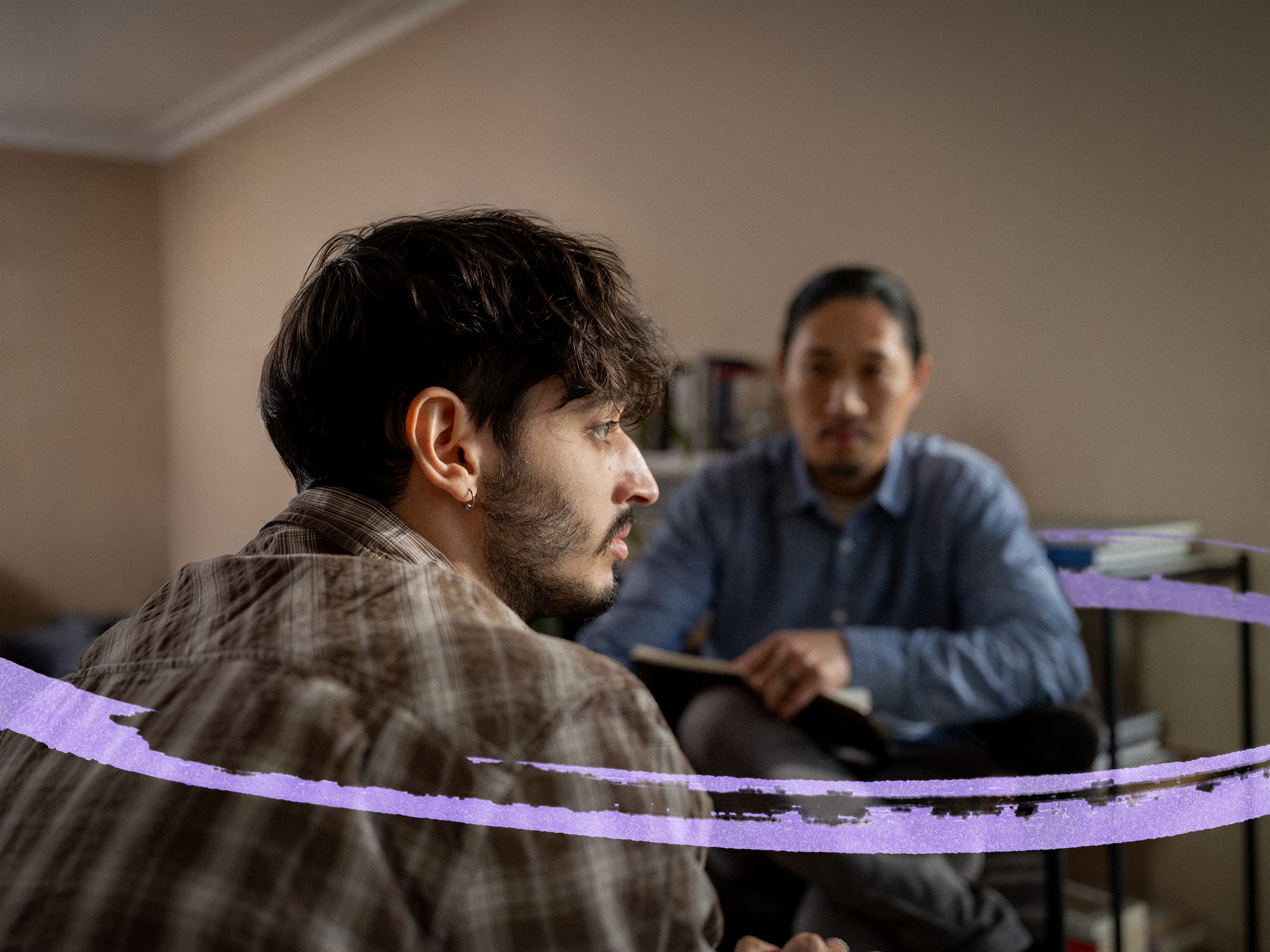
A man in conversation with his GP

Practical tools

Make a connection

2.3 M — Make a connection


Press play to hear more from men about making a connection in primary care.
Click to watch

Brad

I was already feeling vulnerable. I was feeling weak because of that vulnerability. And I was going to a stranger where I had to ask for help.

Kenneth

Why am I scared to go to the doctor? Not scared about what I'm going to find out about my health. I don't want to talk to this guy because I feel like he's going to yell at me.

David

You're already exhausted, and when you go along and you don't connect, I think a lot of us just say, “It doesn't work, this stuff.”

Cooper

I sat down, I burst into tears, and I said, “I'm not coping.” And she goes, “That's fine. That's completely normal. Let's get you sorted.”

James

I really think about just how curious he was, and that really helped me just be like, oh, he really cares about me and how I'm going and how I'm feeling.

William

Building up that kind of rapport really helped me feel comfortable in sharing those kind of smaller problems and those more intimate problems that I didn't feel confident previously being able to share.

Andrei

I would like to think that they've got an interest in your complete recovery, not just their component of it.

Kenneth

If a patient feels like you care, the outcome's going to be much better. They're going to try a lot harder as well.

2.4: A — Agree on a path

2.4 A — Agree on a path

Autonomy and self-reliance are central to how many men understand themselves.


When healthcare feels like something done to them rather than with them, those norms activate as resistance, and resistance presents as disengagement. Men who feel shut down when they ask questions, or who receive a management plan without being genuinely involved in it, are less likely to come back (Seidler et al., 2025).


A man in conversation with his GP

Practical tools

Agree on a path

2.4 A — Agree on a path


Press play to hear from men about what can help them agree on a path in primary care.
Click to watch

Brad

Having a sense of self-agency when making health decisions is critical. My sense of masculinity means I want to retain strength and resilience.

William

Often, I found that I was never given options, like, “Okay, here's the treatment, here's what you do. Come back in six weeks.” I think when I haven't had that kind of open relationship, it becomes really tricky to question that and work out what to do next.

Andrei

You have to be part of the solution. Your health needs to be tailored to you. But in order for that to occur, they need to allow you to do that.

Azhaan

He was just super respectful about it. I think what's interesting is he was okay with me not taking it. He was like, “Oh, if you don't want to take it, that's completely fine.” And hearing that from him made me feel like, oh, no, maybe I can take it. The fact that he was giving me that agency made it feel like I'm picking this option. It's not something that's being forced on me. I'm going to change because I want to change, and that goes really far.

Kai

She talks me through all of the options available, the pros and cons of each of the options. It's important because I'm able to stay conscious of the decisions that I'm making.

Andrei

She'll often say, “Well, what do you think?” She's happy to hear my perspective, happy to hear my thoughts on what the options are.

David

Having a doctor that was willing to partner with me, not dictate to me, created that sense of empowerment, that sense of control.

James

And what that meant was, is then I then kept going back to my GP so we could actually spend time trying to nut out what the best process is and how to go from there.

David

Getting a sense of agency, getting a sense of, “I'm doing this with the help of you people,” as opposed to, “You're all going to drag me through it.” I think it's everything.

2.5: L — Land a message

2.5 L — Land a message

On top of all this, remember that he's likely to be flying blind.


Stoicism and self-reliance widen the risk on both sides: he might not understand you, and if he doesn't, he's unlikely to say so. Landing a message means making sure the information actually lands: pitched in language he can use, delivered with the care that lets him take it in.


A man in conversation with his GP

Practical tools

Land a message

2.5 L — Land a message


Press play to hear from men about what can help a message land in a healthcare conversation.
Click to watch

Kenneth

I'm a pretty well-read person, but I find out things today about my health that no one ever told me. And it's not until you ask the question that you ever get anything close to an answer.

Cooper

Having your doctor who takes the time to inform you is something that I think sets you up for success.

Andrei

The best thing they can do is to talk you through that and say, “Look, you've got this. I believe that your condition is X.”

Brad

Give me an example of that. I found that was a really great tool the doctor used. That helped her to understand my situation better, and it helped me to explain more, and we both got a better understanding of each other.

Cooper

She'd go, “I'm going to put you on a new prescription. Here's an info sheet on side effects that you should look out for — things that, if you find any worries, here's what you should look for.”

Brad

It's also taking the time to understand the system — the difference between Medicare, what's available, what's not, what's chargeable, what's bulk billed, the difference between a healthcare plan for mental health or a chronic condition.

Andrei

It takes a bit to learn that.

David

Really sharp guy, but he doesn't show it. He just talks through things. But he treats you as a genuine partner and explains things — the drugs, and why are we doing this and doing that.

Kenneth

It's getting a sense of who the patient is to then understand: does this person understand what I'm telling them, and what do they need to know?

2.6: E — Ease him into the next step

2.6 E — Ease him into the next step

Many men want to stay in control of their own health, but the system isn't easy to navigate alone.


Easing the next step is about preserving his agency while keeping the ask small enough that the system itself doesn't become the barrier.


A man in conversation with his GP

Practical tools

Ease him into the next step

2.6 E — Ease him into the next step


Press play to hear from men about what makes it easier to take the next step.
Click to watch

Kai

She makes sure that I have the supports there, and if I feel like I don't, she books in another appointment with me so that I can check in with her. It just feels so weird to be supported.

James

“We're going to work on some tools or work on some referrals so you can go and speak to the people you need to speak to about your mental health.” In separate batches, as opposed to this blanket fire all strategy.

Kenneth

It's a two-way street. So they'll listen. They want to know what's going on. They tell you to do particular things — “Go and see this physio,” or do whatever it might be. But then they want to know the outcome, and they seem to follow up the records as well.

William

She had this pamphlet of different medications and things like that, and we talked it over together. She's like, “Okay, come back. We'll assess how things are going.” And it's made life a lot easier — you feel listened to, you feel heard, and you know that if anything ever comes up, there's that safety net and there's that safe space you can go to.

Kai

My GP said, “I look forward to seeing you in my next session.” That made me feel like there was someone waiting for me.

James

It wasn't a whole starting the process again. It was like, “Yeah, we were up to that from last time. Here we are now.”

Tom

He was firm on the fact that I wasn't leaving there without a clear plan of what was coming next and a referral or two. That felt like care for me for the first time in a long time, and it felt different — and I needed different to what I'd been experiencing. So, yeah, it was really important.

2.6 E — Ease him into the next step

Reflect on your practice.


Pause for a mo'

Review the MALE framework and reflect on your own practice. Identify three practical tools that would work well with your male patients, and describe how you'd apply them.

✓ Saved

2.6 E — Ease him into the next step


In rural and regional settings, distance, access and expectations around stoicism can all shape how men engage with care. Nurse Practitioner Michael Whitehead took some time to reflect on some of his specific ways of working with men in remote areas while on Ngaanyatjarra Lands.

Press play to hear from Michael.
Click to watch

This video is a short excerpt from a longer conversation filmed by the team at Ngaanyatjarra Health Service on the Ngaanyatjarra Lands. We thank Ngaanyatjarra Health Service for sharing this footage, and acknowledge the Traditional Owners of the Ngaanyatjarra Lands, and their continuing connection to Country, culture and community. Watch the full video here.

2.6 Ease him into the next step

It's not now or never


There's a trap many GPs fall into with men. The fear that he might not come back drives you to do everything while you've got him. He leaves with more than he can act on, which is what makes him not come back.

The full value of MALE compounds over time. The man who minimises in his first consultation isn't going to disclose because of one well-phrased question. He'll disclose because over multiple consultations he's seen that minimisation isn't taken at face value, and disclosure isn't met with more intervention than he wants.

Each MALE move builds the trust that does the heavier lifting later. The next consultation isn't a lost opportunity. It's the strategy.

Part 2 complete

You've reached the end of Part 2: Meet him where he's at.

You've explored a practical, evidence-based framework for engaging male patients in ways that account for the specific barriers masculinities can create.

Press play to hear from some of the experts about what they consider when adapting their approach for men in healthcare settings.
Click to watch

Dr. Tim Jones

One of my little paraphrases that I use when I'm teaching GPs is this idea that everyone in your room is one of three categories. They're a prisoner, a visitor, or a patient. A prisoner's there, but they don't want to be there — they're there because they have to be there. A visitor is someone who's just trying you on, and a patient is someone with whom you've got an easy rapport and you're working in an aligned way.

What I teach my trainees is that you can only move someone one of those boxes in any appointment. So if someone's there really vulnerable as a prisoner, the most you can get out of that first appointment is that they might become a visitor. They might come back to you the next time. But it's really inviting them to take that approach rather than trying to treat them like a patient straight away and start setting some goals or trying to organise all the preventative testing. You've got to get them to come back first and start trusting you.

Prof. Magdalena Simonis

I've found they don't tap into that in themselves that well as adults. "Oh, I feel tired all the time. I feel like crap." And you say, "Well, okay, so how's your sleep?" "Oh, that's awful. Crap." "So what are you feeling?" "Oh." And they don't quite know what you mean when you say, "What are you feeling?" So it's a different kind of question you need to ask sometimes. It's, "How are things going? Are you finding that you're snappy or angry a lot of the time, or do you dread going to places or dread seeing your friends? Are you not going out with your mates, or are you drinking more than you usually would?" Those kinds of questions.

Dr. Tim Jones

The best question we ever get taught to think about is why now? Why is someone in our room now? And it's particularly important if a problem seems to have been going on a long time. "You say you've been working with this back pain for six months now. Why have you come in right now about it? Is there something particular about that that we need to focus on?" And that's when the real reason for being there comes out. "Oh, well, it's only really become a problem because work's told me that I might lose my job," or "I can't pick up my son anymore."

Prof. Magdalena Simonis

I treat it as a bit of a Biology 101 — what happens when you have more fat around your tummy, how that impacts your insulin, how that impacts your diabetes risk. Giving that story behind why the change needs to happen helps them address that for themselves with more confidence.

Dr. Tim Jones

It certainly wasn't easy when I was starting. The phrases were clunky. They sometimes landed, they sometimes didn't. But I think one of the things that I learnt very early on in men's health is that people can really tell if you care and if you're being authentic. Even when I thought I'd flunked the consult and would never see them again — six weeks later, they'd be booking back in. So I learnt that sometimes it's not about how you feel, it's just about what you're trying to do in each and every consult.

Download a copy of the MALE framework practical tools.

Download

Coming up

In Part 3: Hiding in plain sight, we turn to two presentations where a gendered lens makes the biggest clinical difference: male-type depression and suicide risk in men.

Additional resources

Tick the resources you'd like to keep, then email them to yourself. Anything you saved with the bookmark button as you moved through the module is already ticked for you.

    Tip: save resources as you go using the bookmark button inside each "MOUSTACHES LOVE RESEARCH" panel.

    Your reflections

    Review everything you wrote during the module, and email or print a copy to keep for your own records.

    You have now completed this module. Click ‘Next’ in the bottom right hand corner to continue to the next module.

    DEV ONLY

    Internal reference

    Version History

    Current version: v0.02

    Each entry represents one round of committed changes. Version 1.0 = go-live.

    • Course renamed to “Men in Mind HCP”. The previous name claimed the course was tailored for health and community professionals; it is not yet, so the name no longer says so. “HCP” is deliberately generic, and the disclaimers carry the detail.
    • The audience disclaimer on the opening screen is now much larger and harder to skim past — body-copy size instead of caption size, a full border with a heavy left rule, and a shadow lifting it off the photograph. The space came from capping the display title on short screens, never from shrinking the notice.
    • Mixpanel and all analytics removed from this edition: nothing is tracked or transmitted.
    • Health and Community Professionals edition created — verbatim clone of Men in Mind for General Practitioners (ACRRM) Part 2 at v0.08 (commit d35dfe9). Versioning restarts at v0.01 for this course; every entry below this line is inherited GP and ACRRM history, kept for provenance.
    • Accessibility & polish: quiz question text now responds to the text-size control; captions and Tips headings track text-size and night mode (shared engine); branching-head styling aligned with the other courses.
    • S14: restored four paragraphs that were rendering black-on-black and were invisible.
    • Practical-tools panels now line up with the boxes stacked against them.
    • Slide 29: "Watch the full video here" is now a working link to the Ngaanyatjarra Health Service video (it was plain text).
    • Slide 29: added breathing room between the intro copy and Michael Whitehead's video.
    • Hero: on short screens the copy no longer slides up under the header — it anchors to the top and scrolls instead.
    • Videos on dark/multimedia screens now render at their full width.
    • The MALE framework handout is now bundled with the module as a PDF download instead of an external link, so it works offline.
    • Documented that the Michael Whitehead video carries its own captions (it is Ngaanyatjarra Health Service footage, not ours), so it intentionally ships without a transcript. No learner-facing change.
    • New screen 29: rural and remote practice — Nurse Practitioner Michael Whitehead on the Ngaanyatjarra Lands, with a "Find out more" acknowledgement. Screens renumbered 30 -> 31.
    • S17: "Work as the way in" gains the example "How's the season been?".
    • ACRRM variant created — verbatim clone of Men in Mind for General Practitioners Part 2 at v0.39 (commit ea9c399). Versioning restarts at v0.01 for this course; every entry below this line is inherited GP history, kept for provenance.
    • Part 2 summary: added a downloadable MALE framework practical tools handout, below the video transcript and above the divider.
    • Practical-toolkit moves now show a TRY THIS label above the example conversation phrases.
    • S9 examples rebuilt as branching-head interactions; S13 bricks levelled; Greg quote removed; S28 image updated; S32 gains the experts video (from Part 1) with a wiggling-moustache close.
    • Azhaan's cover and story merged; an intro quote screen removed. Screens renumbered 32 -> 30.
    • Reduced motion is now a setting in the accessibility panel (turns down animations, moving backgrounds and transitions); the moustache/GIF and background videos honour it.
    • A wrong quiz answer now always highlights the correct one in purple.
    • Video and its transcript are always the same width, with the "Read transcript" button centred between them; transcripts no longer scroll in a small box.
    • Practical-toolkit "moves" show a blinking arrow on the next one to open and a tick once opened; the "Copy" button was removed.
    • Research panels are labelled "Moustaches love research" everywhere.
    • New FAQ answer on certificates and CPD; removed the per-part durations.
    • Accessibility: settings toggles and embedded videos now have proper names for screen readers; the reduced-motion control stays reachable when your device already forces reduced motion.
    • Learning-outcomes and expressive copy now respond to the Text-size control.
    • Images optimised for faster loading; brand fonts served as WOFF2.
    • Release-QA pass. Fixed the "Tips" heading being invisible (black on black) in night mode.
    • Quiz feedback panels now themed for night mode (were bright light panels on the dark background).
    • Two-question quiz screen now requires both questions answered before continuing.
    • Hero copy now responds to the Text-size (A/A+/A++) control; accordions/"Mo' Research" announce open/closed state to screen readers.
    • Reflection responses autosave so a refresh/reload won't lose unsaved text.
    • "Contact support" now opens the in-module support dialog (consistent with Parts 1 & 3); darkened the subtle grey label colour to meet WCAG AA.
    • S13 "Two sides to every brick": flip cards realigned to two on the top row and three on the bottom.
    • S32 (summary): removed a stray video that did not belong on the final screen.
    • Onboarding & FAQ copy updates (consistent across all MiM Pro streams): reworded the Continue-button navigation hint; removed the trailing Oxford comma in the accessibility-settings hint; and revised the "Can I take a break?", "How long is this course?" and "Do I need anything to complete the course?" FAQ answers.
    • Mixpanel event tracking: chapter/screen navigation, video play/progress/complete, quiz, accordion/flipcard/reveal-list interactions, research-link clicks, save-for-later, saved-resources email, and reflection saves.
    • Fix: the wrap-up/summary screen's resource checklist and email actions never initialised — a stale post-renumbering check for "screen 36" instead of the real summary screen (32). "Email my saved resources" would always report nothing ticked.
    • annotated-portrait.js (Practical tools modal) is now a single shared file in _components/, no longer duplicated per module — its CSS stays per-module only.
    • All four Practical tools sections (M/A/L/E) reworked into the "annotated portrait" — a full-bleed photo with the tools as hand-annotated margin notes; each opens a modal with the tool copy, tap-to-copy example phrases and its research. Each section has its own photo.
    • Research now sits inside each tool's modal, mapped to the most relevant tool. The "Men talk through stories" pull-quote card is preserved below the L-section portrait.
    • M/A/L/E knowledge-check transcripts: added per-speaker labels (Brad, Kenneth, David, Cooper, James, William, Andrei, Azhaan, Kai, Tom), matching the updated pharmacy versions of the same films. Merged/split combined speaker paragraphs to match.
    • Video tiles on text screens now align to the left edge of the body copy (were centred/offset), and the "View transcript" button is centred directly under the video. Engine-level fix in the shared component layer.
    • Mobile: fixed the header controls clipping off the right edge on phones — the logo, progress counter and four icon buttons overran narrow viewports and cut off the menu button. Tightened the mobile header (smaller logo, icon size and gaps) so all controls fit on 360px+ screens. Engine-level fix in the shared component layer.
    • FAQ screen converted to the shared accordion component so it matches the rest of the course (aligned to Module 1's FAQ look and feel).
    • Added the final lived-experience portraits: Brad (44) and Andrei (52) photos are now in place, replacing the earlier Brad shot and the Andrei placeholder image.
    • Stakeholder feedback round 1 (global). Sound notifications off by default; transcript button centred below video.
    • Course renamed to "Men in Mind for General Practitioners" — page title, module header, hero title and SCORM manifest updated (previously a mix of "Primary Care" / "General Practice" wording).
    • Storyboard V1.1 reconciliation — structure & lived-experience. Moved the Azhaan "hear it from him" video + questions to after "The (hidden) hidden agenda", matching the storyboard order. Removed the builder-invented lived-experience quote slides (a duplicate David, a second Bradley, Cooper, and James) and re-pointed the remaining quote slides to the storyboard's people: David (68) at the intro, Brad (44) before the MALE framework, and Andrei (52) before "Make a connection". Dr Malcher's quote is now text-only (photo removed). Module renumbered to 32 screens. Asset pending: an Andrei (52) portrait (placeholder in place); the storyboard's William (22) closing quote is not yet built (no feedback comment requested it).
    • Storyboard V1.1 reconciliation — MALE videos + closing video. The four MALE-letter screens (M/A/L/E) had knowledge-check questions after each video that aren't in the storyboard; removed them so each screen is now the "hear from men" video only, with the video instructions aligned to the storyboard wording. Each section now ends on its video, as the storyboard structures it. Added the closing "hear from the experts" video (vimeo 1204130245) to the "What now" recap on the summary screen.
    • Storyboard V1.1 reconciliation (Carlia Brkic feedback) — copy pass. Removed the "Part 2 begins with the whole man" caveat and the builder-added "In Part 2, you covered" recap bullets; dropped the oxford comma in "a clinical tool and going", the full stop after "The (hidden) hidden agenda", the "reflective question" note on the Azhaan intro, and "It isn't the test itself that matters" from the Azhaan feedback. Azhaan knowledge check reduced from 3 to the 2 storyboard questions. MALE framework intro trimmed ("Connection is a clinical lever" and "Each practice is designed…" removed) and the flip-cards reduced to the M/A/L/E labels only. Azhaan and Zac video instructions aligned to the storyboard. Part 2 recap capitalisation fixed to "Meet him where he's at" and the Part 3 lead-in aligned. Leone citation DOI corrected to ijmsch.v4i1.17.
    • Wired the Dr Zac Seidler "MALE framework" overview video (slide 17, vimeo 1202721415), replacing the placeholder. Outstanding asset: the SME practical-insights intro clip.
    • Review feedback (slide 14 + MALE videos). Made the "Two sides to every brick" flip-cards taller so the full two-sided text fits (the provider role was clipping), and centred the lone 5th brick (mateship) instead of leaving it left-aligned. Added video transcripts for the four MALE videos — M (21), A (25), L (29), E (33) — from the supplied transcript files, using the same "Read video transcript" toggle button and transcript-panel formatting as the other videos.
    • Storyboard alignment, batch B + media. Added the three remaining storyboard pieces as new screens: "Two sides to every brick" (slide 14 — 5 flip-card bricks: Stoicism, Self-reliance, Risk-taking, the provider role, mateship, with the Kiselica/Galdas research box); the E — Ease him knowledge check (slide 33, 2 questions); and the "It's not now or never" box (slide 35). Module is now 36 screens. Wired the four MALE videos: M (slide 21), A (25), L (29) and E (33) — playing inline above each section's questions. End screen now uses the branded completion box. Asset-blocked still: the SME intro video and the Dr Zac Seidler MALE overview (slide 17). Completion box across the course now uses brand purple #B7A3FC.
    • Storyboard alignment — Tom removed from Part 2. The final storyboard places Tom entirely in Part 3, so his story trio (the old screens 14–16: intro, video, reflection) has been removed and all downstream screens renumbered (17→14 … 36→33). The module is now 33 screens. Part 2's lived-experience voice for 2.1 is Azhaan, exactly as in the storyboard. Config, video map and summary-screen references updated to match.
    • Storyboard alignment (v1.0 final), batch A. Knowledge Checks rebuilt to the storyboard's video-anchored questions: M (23), A (27) and L (31) each now carry both storyboard questions; the Azhaan screen (12) is now the 3-question Azhaan knowledge check (was a reflection). Make a connection (22) now includes the "Who else is in the picture?" tool (replacing "Lead with what's working", which moved to Land a message (30) where the storyboard places it). 2.4 copy restored to storyboard: "Name his role" examples, "Show your working" lead-in, "Provide genuine choice", and the Seidler (2025) line in the intro. 2.6 opening line restored. Outstanding (batch B, needs new screens): the "Two sides to every brick" interactive, the E — Ease him quiz (2 Qs), and the "It's not now or never" box. Asset-blocked: per-letter MALE videos, SME video, Dr Zac Seidler MALE overview (19). Open decision: Tom's story (14–16) sits in Part 2 but the storyboard places Tom in Part 3.
    • Pre-review polish: video posters for Azhaan (11), Tom (15) and Dr Zac Seidler (19) now purple; Mo' Research boxes now link out to the papers (links added where missing). Fixed the navigation panel not opening (it was being disabled by the modal focus-trap).
    • Pre-publish audit fixes. SCORM now actually loads (the script include was missing) — completion and resume now report to the LMS, completion-only (no score). Accessibility: flip cards are keyboard-operable, modals trap focus / restore on close / make the background inert, and slide changes are announced to screen readers. Eyebrow labels darkened to meet AA contrast on white. Fixed the "email tagged resources" hint not revealing (inline style overrode the class toggle).
    • Screen 5: background video added (MIMPRO_Video_GP_01.mp4).
    • Section headings 2.1–2.6: numbers styled purple module-wide.
    • Tips/Examples headings: changed from light purple to black on white backgrounds.
    • Screens 13, 22, 26, 30, 34: click-to-reveal lists converted to reveal-all (sequential 2 s intervals).
    • Screen 15: quote marks removed from video transcript.
    • Screens 22, 30: quote card replaced with animated IGQ design (David and Dr Malcher).
    • Screen 28: Cooper photo updated to Cooper2.
    • Screen 32: James photo updated to James4.
    • Screens 30, 36: background texture removed (plain white).
    • "Pause for a mo'" purple splash applied module-wide via .highlight class.
    • Wired the final "Azhaan's story" video into screen 11, replacing the placeholder.
    • Video gating removed entirely (engine): watching a video is never required to advance, and the Skip video buttons (s11/15/19) are gone. Now a project-wide default.
    • Click-to-reveal redesign (all lists, s13/22/26/30/34): the box is present from the start as a black-texture card with a "Click to reveal" hint; clicking reveals the text in place instead of items appearing over whitespace. Removed the "Click to Reveal Next" buttons.
    • Hero image (s1) and summary image (s36) changed to newhero.
    • Slide 5: "Part 2:" set in purple. Slide 6: purple eyebrow changed to black on the white background.
    • Quote-cards (s22, s30): purple panel changed to black texture with white text; removed the corner quotation mark.
    • Slide 36: removed the "save resources as you go" tip text.
    • Asset: newhero.jpg downscaled for web.
    • Lived-experience quote screens (s4, 7, 17, 20, 24, 28, 32): added the purple MIM_Quotation-Marks image in the top-right corner via .image-quote::before.
    • Slide 9 flipcards: applied the textured treatment (black photocopy front with white text, purple photocopy reverse with black text) via new flipcard-grid--textured class.
    • Slides 10 & 14: name highlighted in purple (Azhaan / Tom).
    • Slide 13: removed the large widening gap between the reveal examples and the Mo' Research box; back to normal spacing.
    • Slide 15: removed video gating — the Tom video plays from data-video on the frame but Continue is never locked.
    • Slides 22 & 30: portrait and quote combined into a single quote-card graphic (purple panel, photo, integrated quote mark). Slide 30 uses the new drmalcher image.
    • Slide 36: moustache logo and "Part 2 complete" centred; email-resources buttons sized correctly (icons were rendering unconstrained); fixed invisible "View all my reflections" button (was white text on a white background).
    • Asset: James1.jpg downscaled 5734×3825 / 18.8 MB → 2000×1334 / 288 KB.
    • Slide-level image pass: replaced transition images with final portraits — James1 (s4), David1 (s7), Brad1 (s17), Ken1 (s20), Brad2 (s24), Cooper1 (s28), James2 (s32).
    • Hear it from him (s10, s14): reworked into full-bleed cover layout with text overlaid on the image and a large "Hear it from him" display title; azhaan-cover (s10) and Tom1 (s14). Screen type changed to image-quote so they no longer trigger the scroll gate.
    • Video screens (s11, s15, s19): fixed broken markup — wrapper now carries id="video-frame-N" (matches playVideo lookup) and the unused vimeo-container div removed; resolves the slide-11 dead-end where play and skip did nothing.
    • Video config: Tom's story (s15) wired to Vimeo 1200618014. Screens 11 and 19 now fall back to a per-screen placeholder (walkable) until their real assets are supplied.
    • Video skip: skip handler now opens the video gate before advancing, so skipping is no longer blocked.
    • quote-box.js: removed import.meta (fatal syntax error in a classic script) — now uses document.currentScript with a location fallback.
    • Slide 13: added a deliberate large gap between the reveal examples and the Mo' Research box that widens as each example is revealed.
    • Slide 19 MALE flipcards: black photocopy texture on the front, purple photocopy texture on the reverse with all reverse text set to black.
    • Slide 22: enlarged the David quote portrait (90px → 180px).
    • Header: logo changed from white SVG (invisible on dark bg) to black SVG (inverts to white correctly); title corrected to "MIM for Primary Care Part 2".
    • Pause for a Mo boxes: reflect__label changed from button to span so shared engine injects the correct pill toggle button.
    • Arrow bullets: tips-list li::before updated to use MIM_Arrow1.png image instead of CSS dot.
    • MCQ screens: added photocopy texture background to all data-type="quiz" screens.
    • Mo Research boxes: duplicate boxes on screens 13, 22, and 30 merged into single boxes; Blundo/Macdonald/Yashadhana split into separate evidence__paper divs; all evidence boxes marked data-evidence.
    • Save for later: full RESOURCES array and tag system ported from Part 1 — initResourceTags, toggleTag, buildResourcesList, updateSummaryTagged, updateEmailBtnState, selectAllResources, emailTagged, emailAll.
    • References & Resources screen: replaced find-out-more accordion with proper checklist (JS-built, Select all/Deselect all, email tagged + email all).
    • Full functionality audit post shared-architecture wiring. Resolved all critical issues.
    • Spacing: added legacy token aliases (--s2 through --s12, --purple-*, --text-muted, --text-faint, --border-mid, --black) to module.css :root so all padding and margin render correctly.
    • Buttons: exposed openReflectionsViewer, closeReflectionsViewer, openChangelog, closeChangelog, revealNext, closeLightbox as bare window globals in mim-gp-shared.js so HTML onclick attributes work.
    • Footer position: added min-height to .screen.active in mim-gp-shared.css so plain content screens fill the viewport and the sticky footer stays at the bottom.
    • CSS double-load: removed redundant mim-gp-shared.css link from HTML head (module.css @import handles it).
    • devPopup CSS conflict: removed Part 2-specific .dev-popup override so shared #devPopup pill-toast style applies correctly.
    • Changelog screen: changed id from screen-37 to screen-changelog to match shared openChangelog() implementation.
    • Fonts: copied fonts/ folder from Part 1 so Overpass and Lora load from local files.
    • Navigation tutorial (screen 2): converted div elements to buttons; added Settings step and Keyboard & Swipe shortcuts step to match Part 1.
    • Find out More boxes: all research citation boxes converted to Mo' Research evidence pattern (black header with MiM mark, +/x toggle, paper-style body).
    • Reflection boxes (screens 12, 16, 35): converted to Pause for a Mo' pattern with highlight label, Lora italic prompt, and data-action save/view handlers.
    • Video screens (11, 15, 19): added click-to-play poster overlay; intro description moved inside poster tile; JS handlers for playVideo, poster/gate reset on unload.
    • Hear it from Him screens (10, 14): removed full-width Hearitfromhim.png banner; added Hear it from him eyebrow.
    • Slide 9: removed animated gif; click-to-reveal examples converted to 2x2 flipcard grid.
    • Flipcard JS: added flipCard event handler (toggle is-flipped class) and evidence toggle handler to event delegation switch.
    • Quiz: tick/cross marks added via CSS ::after on correct/incorrect options.
    • Reveal list button: styled with pill border matching Part 1 secondary button pattern.
    • Copied logo-mim-mark.svg from Part 1 assets for evidence box icon.
    • Replaced full-bleed PNG transition banners with Part 1-matching CSS patterns: character screens now use image-quote (photo + quote overlay), section headers now use part-divider (dark background, centred title).
    • Added screen--dark, screen--multimedia, image-quote, part-divider, and screen-inner CSS to module.css.
    • Updated SCREENS array and NO_SCROLL_GATE to use new data-types (image-quote, part-divider).
    • Accessibility settings panel added: text size (5 levels), night mode, fullscreen, sound effects, keyboard shortcuts, swipe navigation — all persistent via localStorage.
    • Night mode: full dark theme override for all Part 2 components.
    • Settings gear icon added to module header.
    • Touch and trackpad swipe navigation (left/right between screens, respects swipeNav setting).
    • Keyboard nav upgrade: arrow keys cycle quiz options; Escape closes all modals; conditional on keyboardNav setting.
    • Mail modal: bug report now uses in-module modal with "Open in email app" and "Copy details" fallback.
    • Fixed openReflectionsViewer and revealNext — both were unreachable from inline onclick handlers.
    • Promoted from Archive to live modules; module is now self-contained (no cross-folder dependencies).
    • Hero screen (slide 1): rebuilt as full-bleed cinematic — photo background with dark scrim and photocopy texture overlay; copy anchored bottom-left with staggered entrance animation.
    • Video screens: photocopy texture (white) applied as background for visual richness.
    • Header title updated to MIM for GPs Part 2.
    • Texture path overrides added to :root; design system now bundled locally.
    • Changelog entries collapsible — click header to expand/collapse; current version opens by default
    • Changelog auto-closes when dev mode is switched off
    • Version history and changelog screen added (dev mode only)
    • Dev badge updated to show current version number
    • Assets added across all screens; feedback round 1 review pass
    • Initial GP Part 2 build — 36 screens, navigation, video gates, quiz gates, reflections, chapter menu
    My reflections