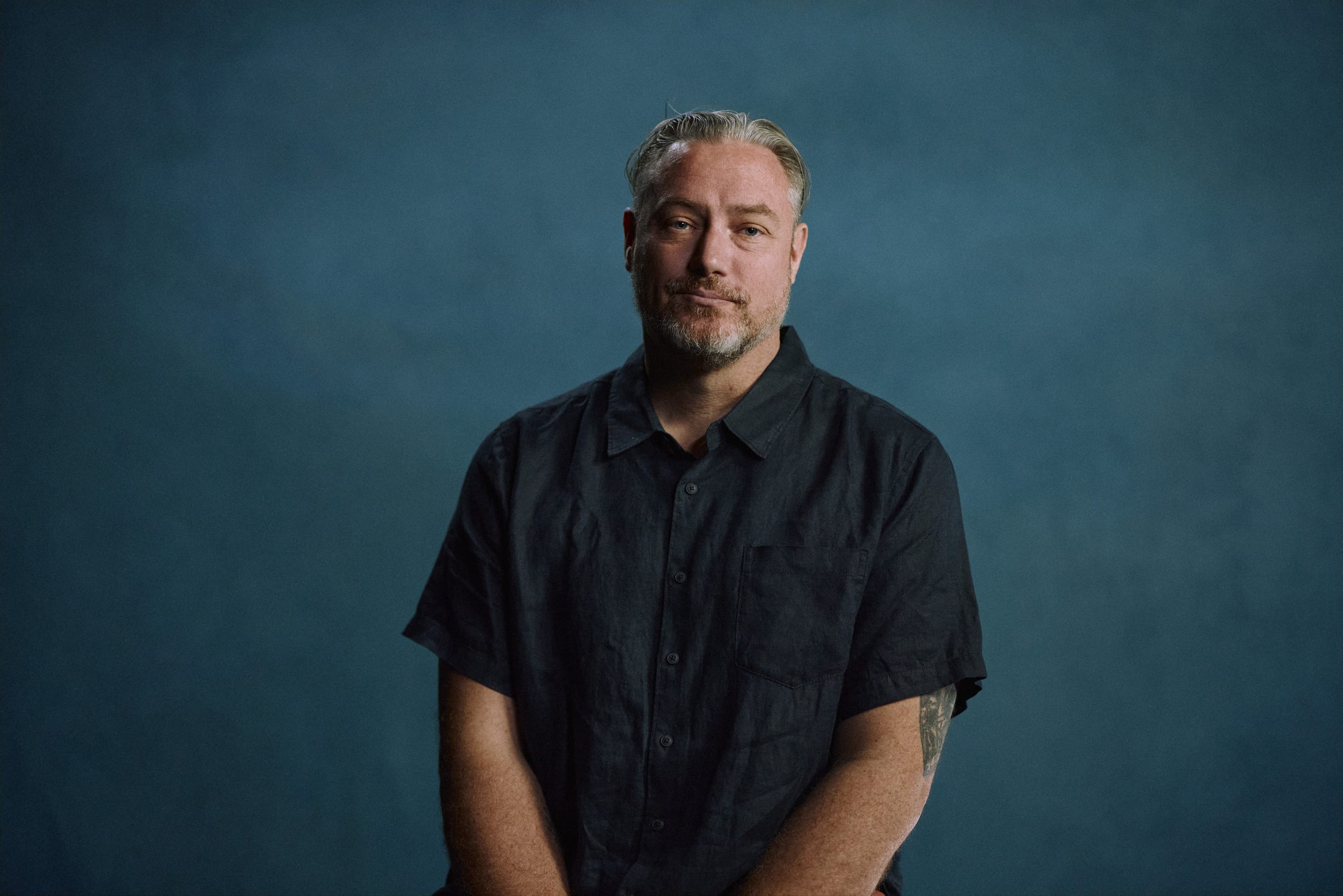
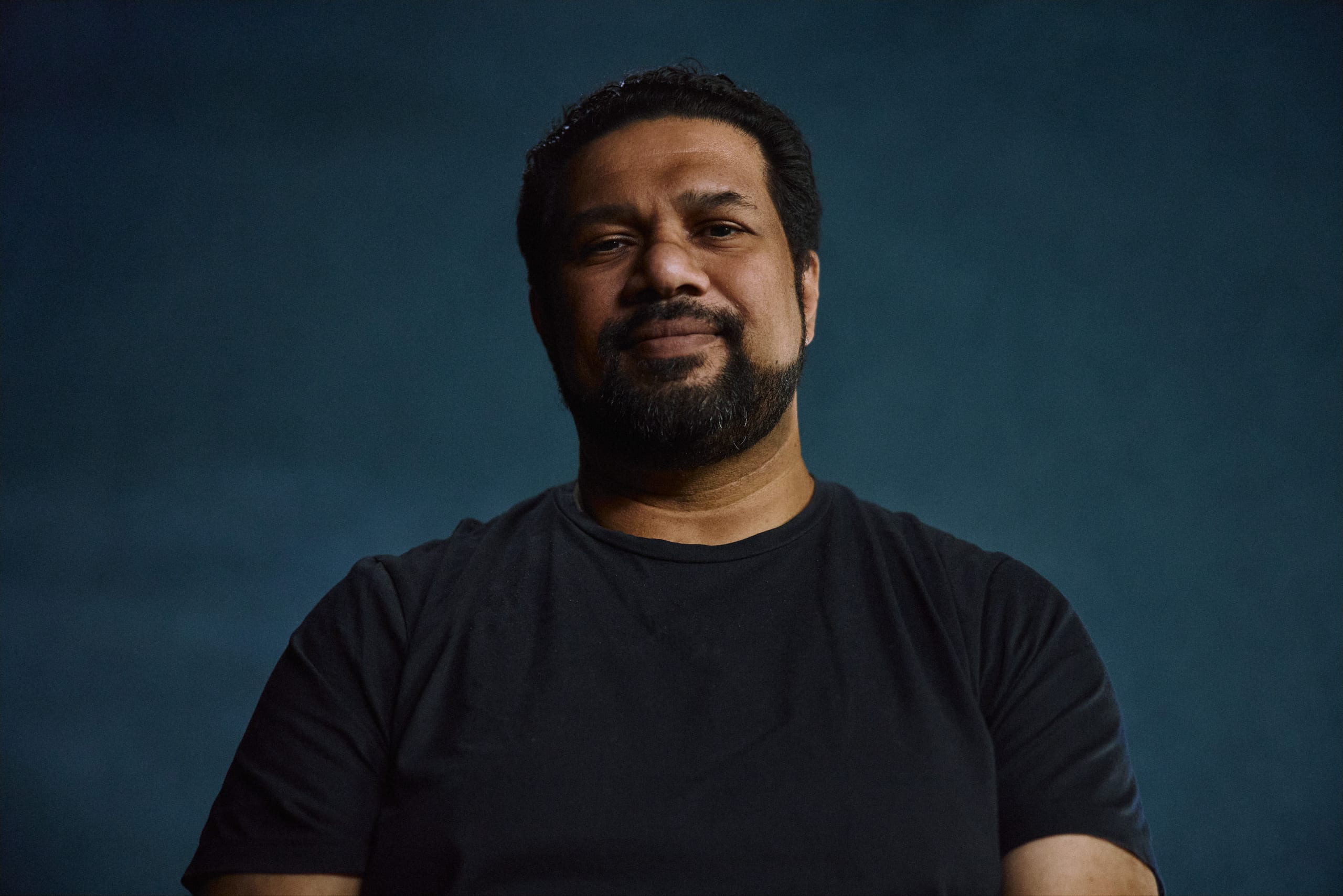
Part 1 explored what men bring into healthcare. Part 2 is what you do with it.
The next appointment, the conversation that goes one layer deeper, the moment he asks you something he hasn't asked anyone else: these rely on him coming back.
Before you begin
How to navigate this course.
Click each section below to see the button it refers to light up. Give it a try!
SCREEN 3 · faq
Before you begin
Frequently asked questions
Select any question to expand the answer.
At the start of the course's final module, you'll be asked to enter your certificate details. Once you complete that module, your certificate will be ready to print, download, or email to yourself. We'll also automatically send your completion details to your governing body.
Absolutely! We know you may need to have breaks or get interrupted. That said, leaving the module 'idle' for too long may result in problems with the course registering as completed and you will need to start again. All you need to do is exit the course by selecting the X in the top right-hand corner. This will save your place and pick up where you left off next time.
The full course is made up of 3 sections, which take approximately 2.5 hours in total to complete.
If you run into any problems, don't fret! Feel free to email learning@movember.com with a screenshot or description of the problem you're having and we'll do everything we can to help, as quickly as we can.
Just a pair of headphones if you want to listen to any of the video content with sound. All videos are captioned so you can listen without sound. The course can be completed on your laptop, desktop computer or even your phone.
Whenever you see a "MOUSTACHES LOVE RESEARCH" panel or a highlighted link, it contains a citation or external resource you can open to read more. This is entirely optional, and there's a full list of references and additional resources on the final screen for you to email or keep.
Absolutely not! Throughout the course you'll be given a heap of optional content including educational videos, external links, case studies and journal articles. None of these are mandatory.
We also reference our supporting evidence constantly, which you can review if you're interested. Consume the optional learning at your own pace, or not at all. Don't worry about saving content as you go — there's a library of all the resources at the end of the module.
This module is designed to work with standard screen readers, including JAWS, NVDA and VoiceOver. Interactive elements are keyboard navigable, videos have transcripts, and you can adjust the text size, switch to night mode, or turn on reduced motion using the settings (gear) button.
Part 1 explored what men bring into healthcare.Part 2 is what you do with it.
The next appointment, the conversation that goes one layer deeper, the moment he asks you something he hasn't asked anyone else: these rely on him coming back. And whether he comes back rests on whether he felt seen the first time. 43% of Australian men have left a healthcare practitioner because they didn't feel a personal connection (Movember, 2024).
Press play to hear from some of the experts about how they adapt their style when working with men.
Click to watch
You need to be able to have the right tools for the job, and you can't just keep trying to hit away at the same thing, doing the same thing over and over again, because that's not necessarily going to work. And that's why we get people who are so disengaged in their healthcare, is because people feel that they're just going to go in and get treated with the same hammer over and over. You need to have different things to apply to different situations.
I find in general with the male cohort that I see, just having a regular, everyday conversation and not making it about the procedure or the process is usually the best way, because the information comes out on its own, just through regular conversation. It'll just be one little thing that you'll talk about. "How'd you go at footy on the weekend?" And that conversation will be, "Oh, I'm really having some issues. My groin's really hurting. I haven't been able to play footy for three weeks." All right, so then that starts a different conversation.
It's almost like you sort of need to encourage them to feel comfortable and almost give them permission to talk about themselves a little bit. So one of the first things I'll say when I'm first meeting a patient is, "So tell me about you." And they're like, "So what do you need to know about me?" I'm like, "Anything. Tell me about you." And they're like, "Oh, okay. Sure." It's almost like they've never been asked to just say something small about themselves before.
It very much depends on the individual. Being in the country, we will see a lot of farmers, a lot of fishermen, and it is okay to swear, and sometimes that's the engagement, is, "How the f**k are you?" Not, "How's things?" It's literally speaking their language, and they let down all their guards and their barriers straight away. Doctors aren't going to do that. Nurses, 100%, the right nurses will do that.
2.1: Acknowledge the whole man
2.1 Acknowledge the whole man
Acknowledge the whole man
Person-centred care is the foundation of good nursing practice. But without a gendered lens, it can be too generic to reach the men who need it most. Treating everyone as an individual matters, but it isn't enough on its own. A gendered lens is a clinical tool. Going without it could cost the man in front of you.
Gender is a social determinant of health. It shapes how men read their symptoms, what they share, how they respond to treatment and whether they come back. This isn't about doubting what men tell you. It's about understanding the conditions they disclose under, which for many is conditions of understatement. Playing down symptoms is one of the most consistent barriers men bring into the room.
Person-centred care isn't usually taught through a gendered lens. Without one, care for men risks missing the specific barriers they bring. Treating the whole man means treating the gendered man. Anything less is person-centred in name only.
Don't take stoicism at face value
Stoicism and minimising symptoms aren't the same as being okay. They're a presentation style, shaped by years of being told that showing weakness costs you. Stay curious when a man's answers close down too quickly. Notice when "I'm fine" sits alongside other signals and make space for more to be said.
Tips
Use his own words. Echoing his language ("managing", "feeling flat", "getting by", "fine") shows you've listened and softens the follow-up. "You said 'getting by' — tell me more" is much less confronting than "are you sure you're ok?"
Quantify before you qualify: A scaling question gives him a clear, bounded task that doesn't need emotional fluency to answer. It's often the easiest way to get at how bad things actually are with a man who has already played it down.
Examples
Tap each card to reveal an example phrase.
1Tap to reveal
"You said you're managing — what does managing look like for you at the moment?"
2Tap to reveal
"You said you're 'feeling flat'. What does 'feeling flat' look like on its worst days?"
3Tap to reveal
"I hear you that it's not a big deal. Just so I've got the full picture — what would have to change for it to become a big deal?"
4Tap to reveal
"On a scale of one to ten, how bad has it been at its worst?"
Macdonald and colleagues (2022) prepared a literature review for the Australian Government Department of Health and Aged Care on men's and boys' barriers to health system access. Problem minimisation, the need for self-reliance and stoicism or emotional control emerged as the most consistent individual-level barriers men bring into clinical encounters, with symptom minimisation in particular shaping not just what men disclose but whether what they disclose is acted on. Access the paper here.
Markowitz (2022) used natural language processing to analyse 1.8 million caregiver notes (502 million words) from a large US hospital. Consistent with non-linguistic evidence of bias in medicine, physicians focused more on the emotions of women compared to men and focused more on the scientific and bodily diagnoses of men compared to women. This pattern held regardless of the clinician's own gender. Access the paper here.
2.1 Acknowledge the whole man
The (hidden) hidden agenda
Men often come in with physical complaints that hide what's really going on. This isn't always avoidance. For many men with depression or anxiety, physical symptoms are the safest way in. The body feels real in a way emotional distress doesn't and it's often the only language they have.
What men have been taught about being a man shapes not just what they're willing to share, but what they're able to share. Many men have never learned the words for what they're feeling. Clinically, this is called alexithymia or more specifically male normative alexithymia: difficulty putting emotions into words, shaped by a lifetime of being taught not to.
Treat the physical complaint as the way in, not the destination. When a man comes in with fatigue, chest tightness, headaches or poor sleep, the physical symptom may be the truest account he can give. Stay with it, get specific and let the bigger picture come through.
Tips
›
Start with the body, then widen out. Begin with the physical symptom he's named. Get more specific about it. Then widen the conversation. The physical symptom is the way in, but you have to go through it before he'll follow you anywhere else.
You mentioned you've been exhausted. What does that feel like day to day? Has anything else changed?
When you notice that tightness in your chest, what's usually going on around you at the time?
Tips
›
Offer the vocabulary, don't demand it. Asking "how does that make you feel?" may fail not because he won't answer but because he genuinely can't. Instead of asking him to come up with the word, offer it: "That sounds exhausting," or "That must have been frustrating." He can then agree, change it or correct you.
How's your sleep been? Your mood?
That sounds exhausting — is that how it feels?
Simons and colleagues (2025) analysed 10 years of Victorian data linking 6,423 people who died by suicide to their ED attendances in the year before death. Among the 2,779 who had attended ED, 40% presented only with physical complaints; no mental-health flag, no flagged distress. The most common presentation was upper limb injury, most coded as "non-intentional harm." The decedents who presented this way were more likely to be older, male and from regional areas. The paper makes the case for opportunistic engagement and screening at every clinical contact, not just those tagged as mental health. Access the paper here.
da Silva (2021) provides a clinical overview of alexithymia, the difficulty identifying and putting emotional experiences into words, alongside intervention guidelines for working with alexithymic clients. Particularly useful for understanding how to respond when a man arrives with somatic complaints as the only available language for distress and how to help him build emotional vocabulary over time without demanding it. Access the paper here.
Hear it from him
Azhaan's story.
The research tells us one story. The men behind it tell another.
✓ Video complete — continue below.
Press play to hear from Azhaan and then answer the questions that follow.
Click to watch
Azhaan
For me, anytime I go see a doctor, it's a pretty vulnerable moment. I don't like feeling weak and seeing a doctor kind of makes it feel like — oh, things aren't okay.
When I go into a doctor, I feel like I'm playing a sort of game where I have to show that, yeah, I'm having a problem, but I'm strong enough to overcome it. I put on a show almost. Even going in for a bad cold, I'd be like, my temperature's that high? I couldn't even tell. That's so surprising to me.
I've had this weird thing with breathlessness for three or four years.
I walk out of doctor's appointments and I think — why did I say this wasn't as bad as it was? It's really bad when it's this hour of night. It's really bad when I'm trying to speak in front of a group and I feel like I can't breathe. That won't come up because that's not something I feel comfortable saying.
I have a tendency to downplay my symptoms. The GPs kind of feed into that. When they hear me downplaying, they're like — okay, this is a sign not to be worried. And then they proceed to not do more investigations. What that leads me to is downplaying it even more.
Knowledge Check · Azhaan's story
Azhaan says he "puts on a show" when he sees a doctor. He tries to look like he is strong enough to deal with whatever is going on.
As a nurse, what is the most useful way to understand this?
Exactly. The performance isn't something to see past, it's clinical information. A man can look like he's coping and still be unwell.
Not quite. Azhaan is not necessarily avoiding the truth. He may be doing what he has learnt to do: look strong, downplay concerns and avoid seeming like a burden. That tells you something important before you even get to the symptoms.
Azhaan says that when he downplays his symptoms, health professionals can take that as reassurance and may not ask more questions or look further.
What is happening here?
Spot on. That's right. Azhaan downplays what is happening, the practitioner may read that as reassurance and the conversation can narrow too quickly. Over time, this can teach him to say less, not more
Hmmm, not quite. This isn't about Azhaan communicating better and it isn't about the practitioner missing a sign. It's about how the two sides of the consultation can quietly reinforce each other, visit after visit.
Azhaan says that when a health professional offers to run a few tests "just to make sure", it feels like permission to accept that something might be wrong and can be helped.
What is the key lesson for practice?
Exactly. Azhaan says he doesn't want to inconvenience a health professional with something that isn't a problem. Visible action tells him his concerns count.
Hmmm, not quite. For a man who's been taught not to bother a health professional without good reason, a visible step from you can be the thing that says: your concerns count here.
2.1 Acknowledge the whole man
Two sides to every brick
Acknowledging the whole man means noticing everything he brings into the consultation, not just the things that makes care harder.
The same beliefs or behaviours that can get in the way of help-seeking can also become strengths you can use in care. They may help him follow a treatment plan, come back for review, accept your suggestion to see the GP or make a change to his health.
Many men have learnt to value things like resilience, discipline, independence, courage and loyalty. These can create barriers, but they can also support recovery when you connect care to what already matters to him.
Select each brick to see both sides.
StoicismTap to reveal
Stoicism may stop him from raising a concern early.
It can also be the resilience that helps him keep going when treatment is slow or recovery takes longer than expected.
Self-relianceTap to reveal
Self-reliance may mean he does not always ask for help when he needs it.
It can also be the resourcefulness he uses to manage his own condition, such as tracking symptoms, following a treatment plan or doing the daily work that recovery needs.
Risk-takingTap to reveal
Risk-taking may be part of what brought him into care.
It can also become the courage to try something new, such as starting a medication, accepting a referral or having a conversation at home that he has been avoiding.
The provider roleTap to reveal
The pressure to provide for others may be one reason he delayed coming to the clinic.
It can also be a strong motivator. If looking after his health helps him keep showing up for the people who rely on him, the care plan may feel more meaningful.
Mateship and group connectionTap to reveal
Wanting to handle things alone in front of his mates may be one reason he has not talked about the issue.
It can also become a source of support. A peer group, a mate who has been through something similar or a sporting club can help him stay connected and keep moving.
Recognising both sides of the bricks is central to everything that comes next.
Kiselica and Englar-Carlson (2010) present the 'positive psychology / positive masculinity' framework, arguing that practitioner engagement and motivation with male patients improve when treatment leverages existing masculine strengths rather than treating norms only as obstacles. Strengths identified in the framework include those listed above, as well as male relational styles, male ways of caring, generative fatherhood, humanitarianism and humour. Each can be named, mirrored back and built into a treatment plan as a clinical lever. Access the paper here.
Galdas et al. (2023) present the 5C framework for designing gender-responsive men's health programs. The paper distinguishes gender-accommodating approaches (recognising men's needs and meeting them where they are) from gender-transformative approaches (supporting healthier expressions of masculinity over time) and positions transformation as the developmental aim. Accommodation works in any single consultation; transformation is what continuity of care makes possible. Access the paper here.
Blundo (2010) described the core tenets of strengths-based approaches with male clients: viewing the man as the expert in his own life, as more than his presenting problem and taking a future focus centred on what he hopes to get from care. Access the paper here.
Macdonald et al. (2022), in a literature review for the Australian National Men's Health Strategy, found that practitioners framing masculinity within a deficit model were consistently less effective at engaging men than those taking a strengths-based approach. Access the paper here.
"I step into that challenge, that responsibility of being a father and it drives me…it motivates me to be healthy"
Brad, 44
2.2: The MALE framework
2.2 The MALE framework
The MALE framework brings what works with men into four practices you can draw on individually or together. It's not a sequence — it's a toolkit. It's strengths-based, treating the man in front of you as the expert on his own life and working with masculinities rather than against them.
Most will feel familiar — a lot of MALE is already part of how you work. The goal is to show which parts have the most impact with men and why.
Watch this short video as Dr Zac Seidler walk through the framework.
✓ Video complete — continue below.
Watch this short video as Dr Zac Seidler walks through the framework.
Click to watch
Dr Zac Seidler
The good news is that the bricks in a man's backpack aren't just barriers.
Those same expectations — things like strength, responsibility, independence or loyalty — can also be powerful motivators.
That's why we use bricks as the metaphor.
Because while bricks can weigh someone down, they can also build something.
When we recognise the bricks men may be carrying, it can change the way we approach the interaction.
Even in short conversations, small shifts can make a real difference.
So how do we do that in practice?
That's where the MALE framework comes in.
These aren't new or specialised skills. They reflect the core elements of good healthcare interactions that most of us use every day with the men we see. What the MALE framework does is highlight the specific aspects of these interactions that tend to matter most when working with men.
Make a connection. Agree on a path. Land a message. Ease him into the next step.
It's not a rigid set of steps and it's not a linear process. Think of it as a set of evidence-based practices you can draw on and emphasise, depending on the situation and the time you have. Each one works with the grain of how men engage, turning what men bring to the room into an asset rather than an obstacle.
Even small adjustments within these familiar parts of an interaction can make a meaningful difference in how men engage with care.
Tap each card to reveal what it means.
MTap to reveal
Make a connection
ATap to reveal
Agree on a path
LTap to reveal
Land a message
ETap to reveal
Ease him into the next step
Connection is a clinical lever and unlike most levers in healthcare, this one is already in your hands.
Ready? Let's start with M: Make a connection
Seidler et al. (2024) conducted a scoping review of 97 studies on gender-responsive approaches to engaging men in primary healthcare. Across counselling, general practice, nursing, pharmacy and social work, 33 distinct approaches converged on a core set of practices: building trust early, using collaborative and strengths-based framing, adapting communication to men's language and providing a clear rationale for treatment. Access the paper here.
2.3: M — Make a connection
2.3 M — Make a connection
M — Make a connection
Men arrive having already worked out whether this was worth doing. How you make the connection sets the terms of the relationship for years.
“
I walked out going, ‘Well, that’s the last of that. I’m better off handling my mental health issues myself.’ That’s exactly what I did for the next 25 years.
And that was the dumbest decision of my life.
— David, 68
Practical tools
Make a connection
Men can tell within moments whether you're genuinely interested in them or just moving through a process. In Seidler and colleagues' work with Australian men, participants said they could "tell pretty quickly" whether a practitioner really cared about their situation and that not feeling cared about was a key reason men disengaged.
The implication is simple. The first minute is for full attention. Warm acknowledgement, eye contact and the kind of open posture that says this man is the only thing in the room that matters right now.
Leone and colleagues reviewed practical strategies for engaging men in primary care. Attentive, empathic communication, including physical orientation toward the patient, was consistently associated with better engagement outcomes.
For men who lean more strongly on traditional norms, showing up can feel like a small defeat. Two things lower the bar: acknowledging the effort and making help-seeking sound sensible and common. One sentence. Low risk. High return.
"A lot of people put this off longer than they'd like. I'm glad you brought it up."
"You're not the first person through that door with this — it's more common than you'd think."
"The fact you've come in to ask about this says something. What's been going on?"
Work and the people in a man's life are two doors he can usually walk through more easily than his feelings and both tell you things that matter clinically.
Work is something most men feel comfortable to talk about and it can be strongly tied to a man's health. This might be because of long-term job-related health issues, but also, job loss, retirement or redundancy can tip men into crisis. Asking is more than small talk: it opens a part of his life he can speak about more freely and signal what's sitting below the surface. It's in how you ask. 'What do you do for work?' names the job, 'How's work been?' opens the conversation.
The people around him matter too. Many nurses already ask questions about the social picture and it can be more powerful information than you might realise. The man who comes in for a routine check-up in March may be the man you are supporting with depression in October. By then, knowing who's around him can help the team understand his support system, identify who may notice changes and plan safer follow-up.
"Has anything changed lately — work, home life, that kind of thing?"
"How's work been?"
"Who is usually the first to notice when something is off?"
"Is there anyone at home you talk things through with?"
2.4: A — Agree on a path
2.4 A — Agree on a path
A — Agree on a path
Many men see themselves through self-reliance and being in charge of their own life. When healthcare feels like something done to them, not with them, those instincts kick in as resistance. Resistance shows up as disengagement.
Practical tools
Agree on a path
Say the collaboration out loud, rather than hoping he'll pick up on it. Name his role in the decision and make it clear whose side you're on. Start from what he wants to achieve rather than asking him to comment on a finished plan.
"I'm going to tell you what I think and why and then I want to know what works for you."
"You're the expert on your own life. I'm the expert in medicine. We need both."
"Whatever you decide, I'm in this with you."
Seidler et al. (2025) conducted focus groups with 32 Australian men aged 18–70 on what helps and hinders engagement with healthcare. Participants who felt shut down when asking questions or who received a management plan without genuine involvement in its construction, described being treated like a customer rather than a person. Empowerment, being involved in decisions and given transparency around the rationale for treatment, was central to whether men felt the encounter was worth returning to.
Rosu et al. (2017) describe 'levelling the hierarchies' as central to engaging men: nurse practitioners who flatten the power gap and bring men in as genuine partners, drawing on shared decision-making and motivational interviewing, see stronger engagement than those working top-down.
What men find most engaging in a clinical encounter isn't a particular style. It's a clear sense of what is happening, why and what comes next. Being open about the reasoning behind your decisions builds engagement more reliably than rapport on its own. Over one in five men cite a perceived lack of progress as the reason they left care without saying so (Movember, 2024).
Being open doesn't mean long explanations. It means naming the logic.
"Here's what I think is going on and here's why I think that."
"We don't have the full picture yet, but this is what the test will tell us and why it matters."
"I want to be straight with you — I'm not sure but here's what we can do to find out."
"You've described a lot of symptoms, let's start with these first few tests to exclude the worse scenarios and then we can work back from there."
Offer the path as a choice, even when the clinical direction is clear to you. Being decisive and being collaborative aren't opposites. Giving him options keeps his sense of control without watering down your recommendation. Be ready to actually change the plan too. If nothing shifts when he raises a concern, the invitation wasn't real. Men notice.
"I've got a recommendation, but I want to hear what works for you before we decide anything."
"There are a couple of ways we could approach this. Here's what I'd lean toward and why, but you know your situation better than I do."
"Where do you think we should start?"
"What would make coming back easier for you?"
Haraldsson et al. (2024) interviewed adolescent males about their experiences of GP consultations. Young men who felt their perspective wasn't genuinely heard described having "exposed themselves in vain", a powerful deterrent to future engagement. The finding illustrates the cost of performative collaboration: the invitation to participate has to be real or it actively damages the relationship.
On top of all this, remember he's likely to be flying blind. Stoicism and self-reliance make this riskier on both sides: he might not understand you and if he doesn't, he's unlikely to say so. Landing a message means making sure it actually lands — pitched in language he can use, delivered with the care that lets him take it in.
Practical tools
Land a message
Metaphor is one of the better-tested techniques in counselling with men, especially when the topic is emotional or when a diagnosis touches on identity. Reach for metaphors from his own world — work, sport, mechanics. Metaphor gives him something to grip on to outside the clinical frame, in language that doesn't feel foreign.
"Think of it like a check engine light — your body's flagging something and we need to work out what's underneath it."
"It's a bit like running a phone on 10% battery for too long. Everything still works, but it's not sustainable."
Genuchi et al. (2017) describe a clinical framework for using metaphors to help men engage with emotional content that traditional masculine norms would otherwise make difficult to discuss. Metaphors built around a man's own areas of interest (mechanics, sport, computing, engineering) provide a safer entry point into vulnerable territory, allowing men to encounter their emotions through familiar language without the experience feeling overly exposing.
Don't default to humour or blokey rapport-building on the assumption that's what men want. Cracking jokes, leaning into footy talk or trading on stereotypically "male" small talk can feel like connection. But for many men, it sends the opposite message: that this isn't a space where the harder stuff is welcome. Australian men consistently say that humour at a diagnostic moment adds to shame and guilt, not the other way around. What men actually want and what they often don't expect to find, is sensitivity. For some, this appointment may be the only place in their life where they get that kind of care.
In practice, this sounds like "I know that's a lot. Take a moment" rather than reassurance. Or "How are you actually doing with this?" rather than "You'll be right." Small shifts, but they tell him the space is safe for the hard stuff.
Obst et al. (2023) conducted a mixed-methods study with Australian men diagnosed with male-factor infertility. Most participants reported their informational and emotional support needs were only somewhat, slightly or not at all met. Humour was often used at diagnosis in an attempt to be "male friendly", but instead amplified feelings of shame and guilt. One participant recalled being told, "Your nuts are stuffed," and described the moment as traumatic.
For many men, a clinical encounter already feels like standing in front of someone with a clipboard, being measured.
Self-reliance says he should have handled this himself.
Stoicism says he shouldn't need this much.
Status says falling short in front of someone in authority is a kind of exposure.
By the time he sits down, he's already braced for a list of things he's failed at. When the appointment feels like a performance review, it brings back the same reasons that kept him out of the room in the first place.
The shift is small: name what's working before naming what isn't. The clinical content doesn't change, but the tone does and so does what he hears.
"Those numbers are heading in the right direction. Let's work on getting them down a bit further. What do you reckon?"
"You stuck with the medication for three months — that's a solid run. What got in the way after that?"
"You've made it back in for your review on time. That's the hard bit done. Let's look at what's changed since last time."
Many men won't admit they've lost the thread, because asking can feel like exposing a gap. So make confusion normal and give him something to take with him. Men are less likely to ask again later, so what leaves the room is what sticks: a line on his care plan, a photo on his phone, a link to a trusted resource.
"Most people find this bit confusing. I did too. Let me put it another way."
"There's no such thing as a silly question here. What's not clear?"
"I'll write the main one down so you've got it. Snap a photo before you go."
"Here's a short video that explains it better than I can. Have a look tonight."
Baker (2018) profiled nine nurse-led men's health projects for the Queen's Nursing Institute and distilled what worked into practical guidance for community and primary care nurses. The moves that worked included meeting men where they already are (workplaces, sports clubs, Men's Sheds), making every contact count and choosing language that lowers the stakes, such as "fitness" over "weight loss".
Self-reliance and the need for control mean many men often don't respond well to feeling overwhelmed or managed. But many also don't have the skills to navigate the health system once they leave the room. Easing the next step is about keeping his sense of control while making the ask small enough that the system itself doesn't get in the way.
Practical tools
Ease him into the next step
When a man has finally crossed the line of asking for help, there's real momentum. Don't bury it under five lifestyle changes, a new doctor's appointment and another health screening, he'll quietly drop the lot. Name one clear next step, said with confidence. You don't need the full picture to do this, just a definite first move.
"Let's just start with one thing. Can you take this with food tonight and we'll see how you go?"
"I'm not asking you to commit to anything long-term. Just give it a week and pop back in so we can check how it's working."
For referrals or a handover: "I'm not suggesting a long course of anything. Just one conversation with your GP to see if it's worth looking into."
"I can't give you all the answers today, but I can tell you exactly what the next move is."
"The bloods will tell us more — but we're not waiting on that to start. Here's what you could start with."
Smith et al. (2008) interviewed 36 Australian men to identify the qualities they most valued when communicating with GPs. Five consistently emerged: a frank approach, demonstrable competence, thoughtful use of humour, empathy and prompt resolution of health issues. Men described typically managing themselves until they couldn't, then expecting clear direction once they sought help.
Set up the next contact before he leaves. A scheduled call-back, booked appointment or flagged date for his next script is more effective than asking him to come back when he can. Masculinities make it hard to re-initiate help-seeking so the default pattern after an interaction is inertia, not action. Following up is how you keep him coming back.
"I'm going to give you a call in two weeks to check in — you don't need to do anything, I'll reach out."
"We should have your blood work back by then, so we can take a look and figure out a plan of attack."
"Let's book another catch-up now so it's in place — you can always change it if things improve."
A plan he agrees to in the room can still fall over the moment life gets in the way. Naming the likely barrier with him and problem-solving it together before he leaves, makes follow-through far more likely than leaving it to chance.
"What might get in the way of taking these and how could we work around it?"
"Realistically, what's going to make this hard? Let's sort that now."
2.6 E — Ease him into the next step
In rural and regional settings, distance, access and expectations around stoicism can all shape how men engage with care. Nurse Practitioner Michael Whitehead took some time to reflect on some of his specific ways of working with men in remote areas while on Ngaanyatjarra Lands.
Press play to hear from Michael.
Click to watch
This video is a short excerpt from a longer conversation filmed by the team at Ngaanyatjarra Health Service on the Ngaanyatjarra Lands. We thank Ngaanyatjarra Health Service for sharing this footage, and acknowledge the Traditional Owners of the Ngaanyatjarra Lands, and their continuing connection to Country, culture and community. Watch the full video here.
2.6 E — Ease him into the next step
Reflect on your practice.
Pause for a mo'
Review the MALE framework and reflect on your own practice. Identify three practical tools that would work well with your male patients and describe how you'd apply them.
✓ Saved
Part 2 complete
You've reached the end of Part 2: Meet him where he's at.
You've worked through a practical framework for engaging male patients in ways that account for the barriers masculinities can create.
Coming up
In Part 3: Hiding in plain sight, we turn to the presentations where a gendered lens makes the biggest difference: anxiety, male-type depression and suicidality in men.
Additional resources
Tick the resources you'd like to keep, then email them to yourself. Anything you saved with the bookmark button as you moved through the module is already ticked for you.
Tip: save resources as you go using the bookmark button inside each "MOUSTACHES LOVE RESEARCH" panel.
Your reflections
Review everything you wrote during the module, and email or print a copy to keep for your own records.
✓
You have now completed this module. Click ‘Next’ in the bottom right hand corner to continue to the next module.
DEV ONLY
Internal reference
Version History
Current version: v0.13
Each entry represents one round of committed changes. Version 1.0 = go-live.
v0.1328 Jul 2026FixCurrent
Accessibility & cleanup: subtle/label text darkened to meet WCAG AA contrast; quiz question text now responds to the text-size control; captions and Tips headings track text-size and night mode; fixed the rural-care screen type and removed dead styles + unused images.
v0.1227 Jul 2026Feature
S5 “Meet him where he’s at” now plays the Part 2 expert-montage opener with its transcript (was a placeholder).
v0.1124 Jul 2026Polish
S5: clearer separation between the Part 1 and Part 2 heading lines.
S8: the second branching-head example now uses the new nurse headshot.
S10: removed the background texture.
S14 (MALE framework): the intro sentence dropped to body copy size, and the flip cards / research below the video are now centred to line up with the video.
S23 rural & regional: the placeholder is replaced with the real video (Nurse Practitioner Michael Whitehead, Ngaanyatjarra Lands) and the matching layout from the ACRRM course.
v0.1023 Jul 2026Feature
S8 "examples" rebuilt as the interactive branching-head conversation design (matching the GP course), labelled "Nurse".
Removed the standalone Azhaan intro screen and merged its line into Azhaan's story screen; module is now 25 screens.
S12 "two sides to every brick" flip-cards reflowed into the centred 2-over-3 pyramid (matching GP); correct-answer feedback box is now purple.
S5: removed the image and split the Part 1 / Part 2 heading onto two lines; S23 image swapped; the Part 2 summary now closes with the wiggling moustache.
v0.0923 Jul 2026Polish
Look-and-feel alignment with the GP & Pharmacy courses: S15 & S24 videos now line up with their centred intro text (were drifting left).
Hero sub/body text now responds to the Text-size (A/A+/A++) accessibility control.
Incorrect-answer feedback box switched from red to neutral grey (matches Pharmacy); removed a dead black-on-black rule on the S6 divider.
v0.0820 Jul 2026Fix
S15 and S24: restored six paragraphs that were rendering black-on-black and were invisible.
Practical-tools panels now line up with the boxes stacked against them.
v0.0720 Jul 2026Polish
Practical-toolkit moves now show a TRY THIS label above the example conversation phrases.
v0.0618 Jul 2026Feature
Reduced motion is now a setting in the accessibility panel (turns down animations, moving backgrounds and transitions); the moustache/GIF and background videos honour it.
A wrong quiz answer now always highlights the correct one in purple.
Video and its transcript are always the same width, with the "Read transcript" button centred between them; transcripts no longer scroll in a small box.
Practical-toolkit "moves" show a blinking arrow on the next one to open and a tick once opened; the "Copy" button was removed.
Research panels are labelled "Moustaches love research" everywhere.
New FAQ answer on certificates and CPD; removed the per-part durations.
Accessibility: settings toggles and embedded videos now have proper names for screen readers; the reduced-motion control stays reachable when your device already forces reduced motion.
Learning-outcomes and expressive copy now respond to the Text-size control.
Images optimised for faster loading; brand fonts served as WOFF2.
v0.0515 Jul 2026Polish
Onboarding & FAQ copy updates (consistent across all MiM Pro streams): reworded the Continue-button navigation hint; removed the trailing Oxford comma in the accessibility-settings hint; and revised the "Can I take a break?", "How long is this course?" and "Do I need anything to complete the course?" FAQ answers.
v0.0415 Jul 2026Feature
Mixpanel tracking wired in: loads mixpanel_analytics.js, registers the stream/module-part/course super-properties, and names all three video screens for the reports. Tagged every FAQ, example-phrase reveal, brick flip card and MALE-framework flip card with a data-track-name; added link_clicked on research-paper links and reaction_clicked on "Save for later". No learner-facing change.
v0.0310 Jul 2026Polish
LD feedback: new hero image, and the background transition video swapped to the nursing-themed clip. (Transcript pills were already centred in this module.)
v0.029 Jul 2026Feature
Added a new screen at the end of 2.6 (after the practical tools, before the "Pause for a mo'" reflection): "Rural & regional care" — intro copy + a Vimeo video placeholder, with a "Find out more" box carrying the Ngaanyatjarra Health Service acknowledgement and a link out to the source video on YouTube (not embedded). Screen count 25→26; downstream screens renumbered.
v0.018 Jul 2026Feature
First-draft build: Nursing Part 2 authored verbatim from the Men in Mind Primary Care Nurses storyboard v1.0 on the shared MiM engine.
Accessibility settings
Text sizeAdjust body text for easier reading
Full screenFill your whole screen with the module
Night modeDark background with light text
Reduced motionTurn down animations, moving backgrounds and transitions
Sound effectsPlay chimes when you complete a section
Keyboard shortcutsUse arrow keys and Space bar to navigate
Swipe navigationSwipe left or right to move between screens on touch devices